Tournament Dynamics Shift When Poker Rules Blend with Slot Mechanics on Swedish-Regulated Platforms
Skriven av Noah Foster · 2026-08-24
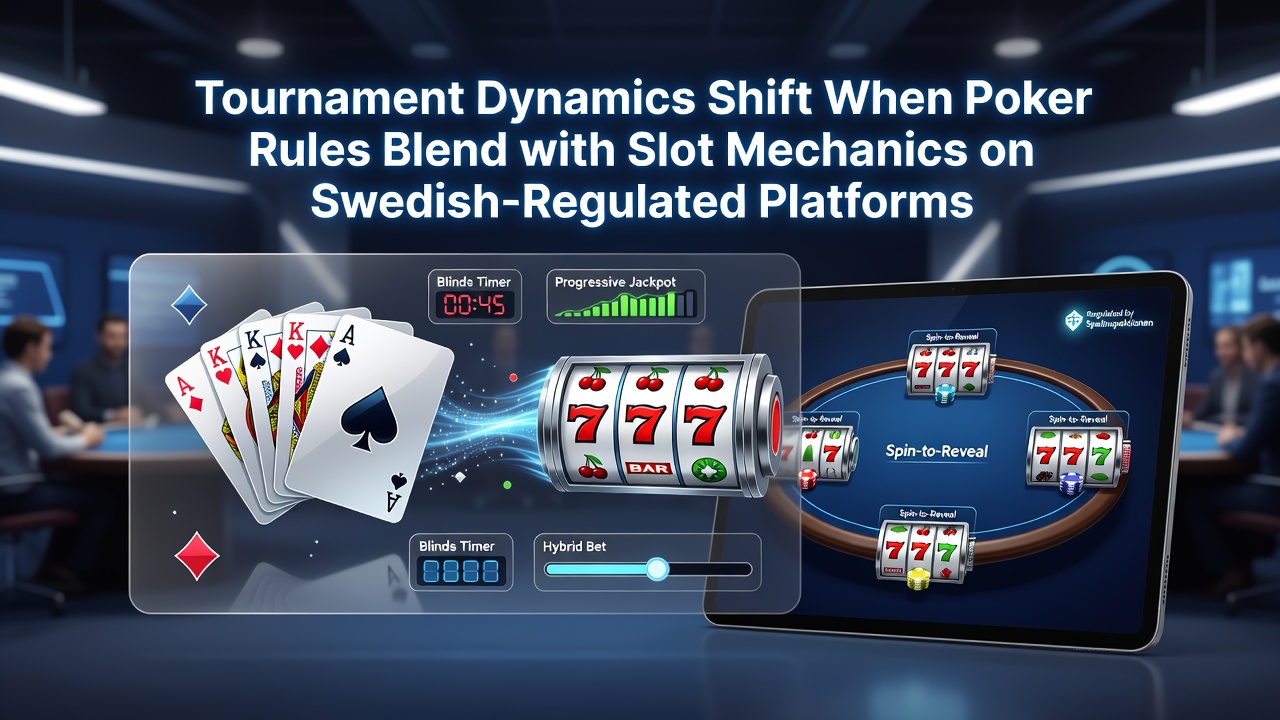
Tournament Dynamics Shift When Poker Rules Blend with Slot Mechanics on Swedish-Regulated Platforms
Swedish-regulated platforms have introduced hybrid tournament formats that combine traditional poker structures with slot-inspired mechanics, and data from licensing authorities shows these changes alter player decision points throughout events. Researchers tracking participation patterns note that random bonus features, such as multiplier reels triggered at specific hand intervals, now appear alongside standard blind increases and table balancing procedures. According to records maintained by Spelinspektionen, operators must submit detailed logs of these integrated systems to maintain compliance with the Swedish Gambling Act, which requires clear disclosure of all random number generator functions used in tournament play.
Regulatory Framework Supporting Hybrid Formats
Platforms operating under Swedish licenses integrate slot mechanics through predefined rules that maintain poker hand rankings while introducing probability-based elements drawn from slot technology. Government reports indicate that approvals for such formats require operators to demonstrate how RNG components interact with poker rules without violating fairness standards. Observers at industry conferences have documented cases where tournaments award additional chips or side pots via slot-style bonus rounds, and these additions occur at set intervals rather than continuously. Figures released by the Swedish authority reveal steady growth in licensed hybrid events between 2023 and 2025, with further expansion projected into 2026 when updated technical guidelines take effect in August of that year.
Mechanics That Alter Standard Poker Flow
Hybrid rules replace portions of traditional payout structures with random multipliers that activate after every tenth hand or during scheduled breaks. Players encounter situations where a single bonus spin can double or triple a pot that would otherwise follow standard betting rounds, and this shift forces adjustments in pre-flop aggression levels. Studies conducted by European gaming research groups show that average hand duration increases when slot features pause play for animation sequences, while overall tournament length remains comparable due to accelerated blind schedules that compensate for the added time. Data indicates that variance in chip distribution widens because slot outcomes introduce larger swings than poker alone typically produces.
Strategic Adjustments Observed Across Events
Participants adapt by tracking both poker probabilities and the frequency of slot activations within each structure. One documented case from a Stockholm-based operator showed that players who allocated mental resources to monitoring bonus timing achieved higher survival rates into later stages compared with those focused solely on hand strength. Research papers from academic institutions in Australia highlight similar patterns in regulated markets where hybrid rules appear, noting that bankroll management strategies must account for the unpredictable chip injections from slot elements. Platforms publish rule sheets that detail exact trigger conditions, allowing competitors to calculate expected value across both poker and mechanical components during each round.
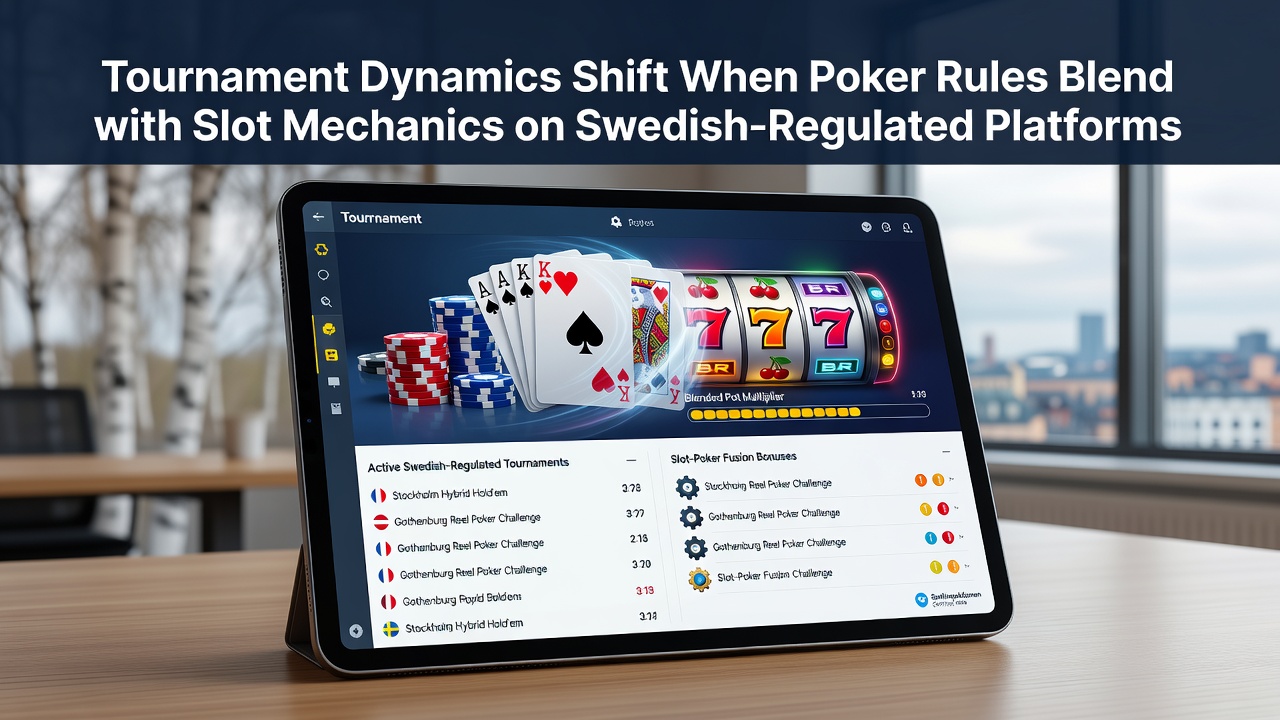
Data Patterns from Licensed Operators
Analytics shared by multiple platforms indicate that final table compositions change when slot mechanics distribute chips more broadly early in events. Larger fields reach the money positions more frequently because random bonuses reduce the impact of early eliminations driven purely by poker variance. Canadian regulatory summaries from similar blended formats report comparable redistribution effects, suggesting the phenomenon spans multiple jurisdictions that permit such integrations. Swedish operators must archive all RNG results for audit purposes, and these archives provide researchers with granular datasets for examining how slot frequency correlates with player retention rates across multi-day tournaments.
Technical Requirements for Compliance
Every hybrid system undergoes third-party testing before deployment on Swedish platforms, and certification bodies verify that slot features cannot override core poker rules such as hand rankings or showdown procedures. Guidelines effective from August 2026 will require additional transparency measures, including real-time displays that show the probability of bonus activation during active hands. Industry associations have compiled best-practice documents that outline how operators can balance entertainment value with the skill elements central to poker tournaments, and these documents emphasize consistent application of rules across all participants.
Conclusion
Swedish-regulated platforms continue to refine hybrid tournament models that merge poker rules with slot mechanics, and available data demonstrates measurable effects on chip distribution, hand timing, and strategic planning. Licensing records through 2026 will likely document further adjustments as operators respond to updated technical standards while maintaining compliance with existing fairness requirements. Those studying these developments can access public reports from Spelinspektionen and parallel analyses from research institutions in other regions to track ongoing evolution in tournament structures.